Environmental, Social and Governance Responsibility
Environmental, Social and Governance Responsibility
At Gulf Civil, Environmental, Social and Governance responsibilities are embedded in how we plan, deliver, and continuously improve our projects. ESG is not a parallel initiative or compliance overlay. It is integrated into our management systems, delivery culture, and decision-making across all levels of the business.
Our ISO-certified management systems, structured governance, and community-aligned practices support safe, sustainable, and responsible infrastructure delivery across regional and remote Australia.
Our ESG Framework
Gulf Civil’s ESG approach is built on three principles:
- Systems-based delivery, supported by ISO-certified management systems
- Practical risk management, informed by real operating conditions
- Meaningful community outcomes, particularly in regional and Indigenous communities
These principles ensure ESG performance is measurable, auditable, and embedded in project delivery rather than treated as a reporting exercise.
Gulf Civil applies a practical, disciplined, and systems-based approach to environmental protection. Our Environmental Management System is certified to ISO 14001:2015 and governs how environmental risks are identified, controlled, monitored,
and improved across all projects.
Key environmental commitments include:
- Compliance with environmental legislation, approvals, and permit conditions
- Project-specific environmental risk assessments and controls
- Tailored sediment and erosion control measures
- Dust suppression, water management, and spill prevention
- Waste minimisation and maximised recycling on all sites
- Reduced fuel, energy, and resource consumption where practicable
- Transparent investigation and reporting of environmental incidents
- Continual improvement through audits, reviews, and workforce training
Sustainable Construction Practices
Sustainability is integrated into planning and delivery through practical actions, including:
- Use of local suppliers and materials where feasible to reduce transport emissions
- Digital quality assurance and paperless documentation through CivilPro and Varicon
- Selection of fuel-efficient or lower-emission plant where viable
- Waste segregation and compliant off-site or licensed disposal
- Reuse of materials on DRFA, remediation, and reinstatement projects
Environmental Protection in Remote Locations
Gulf Civil has extensive experience delivering projects in environmentally sensitive and logistically constrained locations, including the Torres Strait, Palm Island, Mornington Island, and the Gulf region.
Our controls in remote environments include:
- Biosecurity-compliant freight handling and waste removal
- Sensitive sediment, drainage, and shoreline protection measures
- Cultural and ecological site protection controls
- Alignment with local authority and community environmental requirements
This experience ensures environmental protection is maintained even in locations with limited infrastructure and high logistical complexity.
Climate Resilience
Our work is shaped by Australia’s most challenging climates, including monsoonal wet seasons, cyclone exposure, coastal erosion, and extreme heat.
Climate-aware construction is embedded through:
- Programming around wet season impacts, tidal windows, and weather forecasting
- DRFA experience restoring flood, cyclone, and erosion-affected assets
- Construction techniques that address erosion, scour, and coastal exposure
- Selection of plant, materials, and methods suited to extreme conditions
- Delivery of climate-resilient infrastructure such as seawalls, bunds, and resilient pavements
Our focus is on improving long-term asset resilience, not simply reinstating damaged infrastructure.
Indigenous Engagement and Local Employment
Gulf Civil is committed to respectful engagement and meaningful participation with Indigenous and local communities. Our Indigenous and Equal Opportunity Policy guides how we consult, employ, and build capability.
Our approach includes:
- Early consultation with Traditional Owners and community leaders
- Project-specific Indigenous participation and local employment targets
- Accredited training, mentoring, and career development pathways
- Preference for Indigenous enterprises and local suppliers where feasible
- Cultural awareness embedded into site inductions and toolbox talks
Recent outcomes include:
- Fourteen Iama Island participants completing White Card and First Aid training
- Support for a local Iama worker to achieve RII Roller Operator certification
- Full local labour recruitment on the Warraber Coastal Defences project
- Palm Island workers progressing from entry-level roles into leadership positions
- School partnerships supporting uniforms and essential items for local families
Community Engagement
Through our Community Engagement Policy, we commit to transparent communication, respectful consultation, and alignment with local priorities.
We:
- Provide clear and regular project updates
- Actively listen to and respond to community concerns
- Support local events, sporting initiatives, and cultural programs
- Create tangible local employment and economic benefits
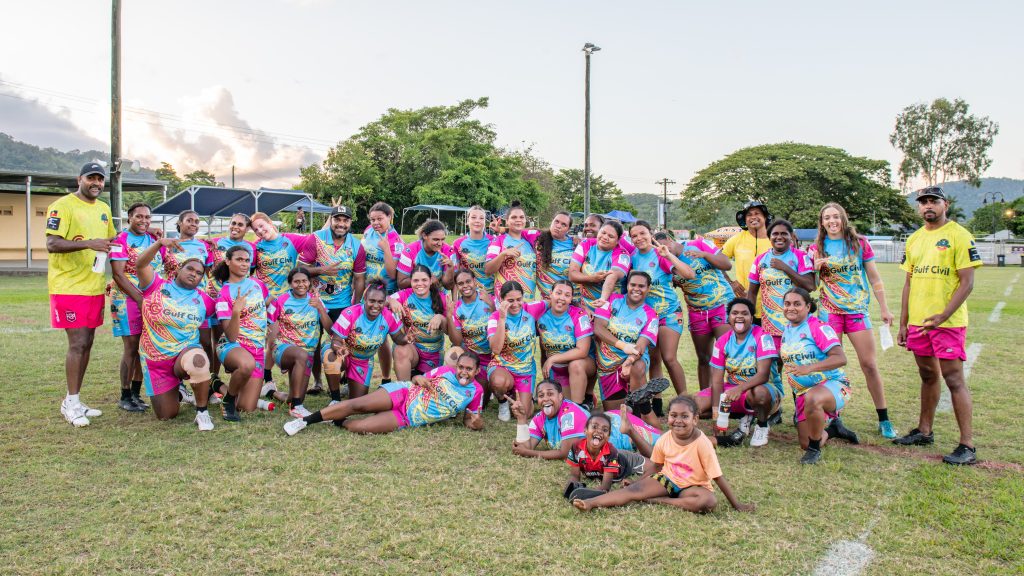
Our community support includes sponsorship of initiatives such as the Indigenous Women’s All-Stars Rugby League Carnival and ongoing support for remote schools.
Diversity, Inclusion and Fair Employment
Under our Employment, Equal Opportunity, and HR policies, Gulf Civil provides a workplace that is:
- Free from discrimination, bullying, and harassment
- Based on merit, capability, and fairness
- Supportive of employees with disability or personal circumstances
- Committed to equal access to training and development
We also engage with disability employment services and provide modified duties or tailored support where required.
Management Systems and Certification
Gulf Civil operates an integrated management system certified to:
- ISO 9001:2015 Quality Management
- ISO 14001:2015 Environmental Management
- ISO 45001:2018 Occupational Health and Safety
These systems provide structured planning, implementation, monitoring, auditing, and continual improvement across all projects.
Ethical Business and Modern Slavery
Our Modern Slavery Policy commits us to:
- Identifying and eliminating modern slavery risks in operations and supply chains
- Vetting suppliers and subcontractors for ethical compliance
- Enforcing contractual prohibitions on forced and child labour
- Transparent reporting where required
Responsible Procurement
Our Consultants and Suppliers Policy ensures procurement that is:
- Transparent and fair
- Based on capability, value, and reliability
- Supportive of local and Indigenous suppliers where feasible
- Aligned with safety, environmental, and social expectations
Safety Governance
Safety governance is embedded under ISO 45001 and our WHS Management Plan through:
- Risk-based decision-making
- Clear supervision and accountability
- Competency verification, training, and SWMS/JSEA controls
- Incident investigation focused on learning and prevention
- Safety is treated as practical risk ownership, not a compliance exercise.
Security, Confidentiality and Information Governance
Our Security Policy ensures:
- Controlled access to sites, depots, and digital systems
- Protection of plant, equipment, and project data
- Secure management of documents, drawings, and intellectual property
- Incident reporting and corrective action for security breaches
Leadership, Oversight and Accountability
Governance is reinforced through:
- Defined roles, responsibilities, and escalation pathways
- Monthly performance and compliance reviews
- Project management and quality audits
- Document control and reporting through CivilPro
Gulf Civil maintains the following accreditations and memberships:
Our ESG Commitment
For every project, Gulf Civil commits to delivering infrastructure that is:
- Environmentally responsible
- Socially meaningful
- Governed by strong systems and ethical conduct
- Resilient to climate, community, and operational challenges
ESG is not a marketing statement for Gulf Civil. It is how we operate, how we are governed, and how we deliver work every day.